Kenya Agriculture Weekly Brief: Sector Reforms, Value Addition and Shifting Farmer Priorities
Kenya’s agricultural sector continued to experience a mix of innovation, policy reforms, and changing market trends this week as stakeholders pushed for higher productivity, stronger food security, and improved farmer earnings. From new tea sector productivity initiatives to renewed focus on value addition and crop diversification, the latest developments reflect growing efforts to strengthen resilience and competitiveness across key agricultural value chains.
Innovation & Productivity: Tea Sector Turns to Eye Care Solutions
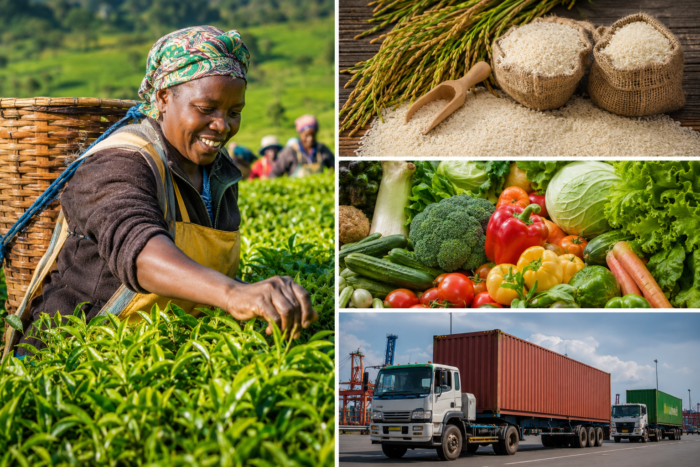
Kenya’s tea sector is increasingly turning attention to a surprising productivity tool — eyeglasses — as stakeholders seek new ways to improve worker efficiency and farmer earnings. Tea farming and processing require precision, particularly in identifying the delicate “two leaves and a bud” that determine tea quality, yet many workers struggle with declining vision as they age.
Research highlighted during International Tea Day celebrations showed that providing near-vision glasses to tea workers improved productivity by up to 22 per cent, with even greater gains among older workers. At Gitugi Tea Factory in Murang’a County, a pilot eye-care programme screened more than 1,000 people and distributed over 800 pairs of glasses. Factory officials said the intervention contributed to improved worker performance and higher tea output despite difficult weather conditions.
Industry leaders say the initiative reflects a broader shift toward improving efficiency and worker welfare within Kenya’s tea value chain. Stakeholders also believe that while eyeglasses alone cannot solve challenges such as climate change and global price volatility, improved vision could remove one overlooked barrier to productivity.
Policy & Value Addition: Government Pushes Local Processing of Farm Produce
The government has proposed sweeping reforms to compel local processing of agricultural produce before export in a move aimed at increasing farmer earnings and creating jobs in Kenya’s manufacturing sector. Agriculture Cabinet Secretary Mutahi Kagwe said the country continues to lose billions of shillings annually by exporting raw agricultural commodities instead of value-added products.
The proposed legislation would require exporters to process products locally before accessing international markets. Stakeholders welcomed the proposal, saying value addition could significantly improve incomes for smallholder farmers while strengthening Kenya’s competitiveness in global markets. However, exporters cautioned that processors would require affordable electricity, improved infrastructure, and stable taxation policies for the reforms to succeed.
Food Security & Production: Government Launches Rice Survey
The government has launched a nationwide baseline survey on rice farming as part of efforts to reduce Kenya’s growing dependence on imported rice. The exercise will collect data on acreage, irrigation systems, production levels, and challenges affecting farmers in key rice-growing regions such as Mwea, Ahero, and Bunyala.
Officials say the findings will guide future investment in irrigation infrastructure and rice production programmes aimed at increasing local output. Farmers’ groups welcomed the initiative but urged authorities to address the high cost of irrigation equipment and limited access to quality seed. Agricultural economists believe stronger rice production could help improve food security while reducing pressure from rising food imports.
Markets & Diversification: Busia Farmers Shift from Sugarcane
Farmers in Busia County are increasingly abandoning sugarcane farming in favour of sorghum and soybean cultivation, citing delayed payments, rising production costs, and unstable miller contracts. Many growers say alternative crops are proving more profitable and resilient under changing market conditions.
Agricultural officers noted that rising demand from breweries and animal feed manufacturers has boosted interest in sorghum production. Analysts warn that unless reforms are implemented in Kenya’s sugar sector, more farmers may continue shifting toward drought-tolerant and market-driven crops that offer quicker returns and more stable incomes.
Market Takeaway
This week’s developments highlight a sector increasingly focused on productivity, value addition, and resilience. While policymakers continue pushing reforms aimed at improving competitiveness and farmer earnings, growers are also adapting through diversification, innovation, and stronger market-driven production systems.
References
- Tuko.co.ke — International Tea Day: Eyeglasses emerge as unlikely solution for industry challenges (May 20, 2026)
- The Star Kenya — Minister Kagwe pushes ban on export of raw farm produce (May 21, 2026)
- The Star Kenya — Government launches rice survey to reduce import dependence (May 21, 2026)
- Nation Africa — Busia farmers shift from sugarcane to sorghum and soybean (May 16, 2026)